Ποντιακό Λεξικό · Άρθρα
Ρωμαίικα: τα ποντιακά της Τουρκίας σήμερα
Τι ξέρουμε για τα Romeyka που μιλιούνται ακόμα στην περιοχή της Τραπεζούντας, από το απαρέμφατο ως την άρνηση ουτσ̑, και ποιος το λέει.
Στα βουνά της περιοχής της Τραπεζούντας ζουν ακόμα άνθρωποι που μιλούν μια ελληνική ποικιλία του Πόντου χωρίς να έχουν φύγει ποτέ από εκεί. Είναι μουσουλμανικές κοινότητες, απόγονοι ελληνόφωνων, και τη γλώσσα τους οι ερευνητές τη λένε Romeyka. Αυτή την εβδομάδα κοιτάμε τη γλώσσα όπως ζει σήμερα στην Τουρκία: τι ξέρουμε, ποιος το λέει και τι δεν ξέρουμε ακόμα.
Ένα όνομα με πολλές χρήσεις
Όπως είδαμε στην ανάρτηση για την προέλευση των ποντιακών, οι ίδιοι οι ομιλητές έλεγαν ιστορικά τη γλώσσα τους Ρωμαίικα, όνομα που το λεξικό μας συνδέει με το βυζαντινό Ῥωμαϊκή, ενώ στην Ελλάδα επικράτησε το Ποντιακά. Στον Σάραχο, το σημερινό Uzungöl, ο Peter Mackridge κατέγραψε για την τοπική γλώσσα του Όφη τη μορφή Ρουμάικα, μαζί με τα ρούμτζ̑α και η ρούμτζ̑ικα. Στα τουρκικά η γλώσσα λέγεται Rumca / Urumce / Rumcika (νεοελληνικά: Ρωμαίικα, αγγλικά: Turkish and Turkish Pontic names for the language), από το τουρκικό Rum.
Μια προσοχή: το ίδιο όνομα δεν σημαίνει πάντα την ίδια γλώσσα. Τα Romeyka του Όφη και της Τσαΐκαρας (Çaykara) δεν είναι η ίδια ποικιλία με τα Rumeika της Μαριούπολης, παρότι στα αγγλικά και τα δύο μπορεί να γραφτούν Romeika.
Πού μιλιούνται και γιατί έμειναν
Η έρευνα τεκμηριώνει ελληνόφωνες μουσουλμανικές κοινότητες κυρίως στον Όφη και την Τσαΐκαρα, και συγγενικές κοινότητες στην περιοχή της Τραπεζούντας. Ορισμένες πηγές αναφέρουν και τη Σούρμενα (Sürmene) και την Τόνια (Tonya). Δεν πρόκειται για τρία ομοιόμορφα γλωσσικά μπλοκ: δημοσίευμα του 2024 για την έρευνα του Πανεπιστημίου του Κέιμπριτζ ανέφερε ότι η σύνταξη και η άρνηση διαφέρουν από κοιλάδα σε κοιλάδα, για παράδειγμα ανάμεσα στην Τόνια και την Τσαΐκαρα.
Η θρησκεία έπαιξε ρόλο στο ποιοι περιλήφθηκαν στην υποχρεωτική ανταλλαγή του 1923. Η ιστορία όμως δεν χωρά στη φράση «οι μουσουλμάνοι έμειναν και οι χριστιανοί έφυγαν»: μετρούν επίσης η γλώσσα, ο τόπος κατοικίας, η ιθαγένεια, οι νομικές εξαιρέσεις και οι μετακινήσεις. Ανοιχτή είναι και η χρονολογία του εξισλαμισμού. Η Ιωάννα Σιταρίδου τον τοποθετεί στον 17ο αιώνα για τον Όφη και την Τόνια, ενώ άλλες πηγές δίνουν πλατύτερα διαστήματα.
Το απαρέμφατο που έμεινε
Οι γλωσσολόγοι ασχολούνται με τα Romeyka κυρίως για το απαρέμφατο. Η Σιταρίδου, στο Diachronica (2014), τεκμηριώνει απαρέμφατο σε ορισμένα συντακτικά περιβάλλοντα: σε προτάσεις με το prin, «πριν», και μετά από αρνημένα ρήματα δυνατότητας σε παρελθοντικό χρόνο. Το παράδειγμα είναι utš eporesa evrin=ä, που η ερευνήτρια αποδίδει στα νεοελληνικά «δεν μπόρεσα να τα βρω». Στο λεξικό μας υπάρχει παρόμοια φράση από τον πρόλογο του Mackridge στο λεξικό του Tursun: ουτς επόρεσα σταθήναι, «δεν μπόρεσα να μείνω».
Δεν είναι όμως το αρχαίο απαρέμφατο όπως το μάθαμε στο σχολείο. Η χρήση του έχει περιοριστεί και αλλάξει, και η Σιταρίδου υποστηρίζει ότι έχει αναλυθεί εκ νέου ως στοιχείο που συνδέεται με αρνητικά περιβάλλοντα. Η ίδια έχει πει ότι τα Romeyka είναι «αδελφή και όχι κόρη» της νέας ελληνικής. Αυτή είναι δική της θέση και όχι ομοφωνία των ειδικών. Τα Romeyka είναι συγγενική ποικιλία του Πόντου με τη δική της ιστορία επαφών, όχι παγωμένη ή «καθαρή» αρχαία ελληνική.
Ουτσ̑ αντί για κι
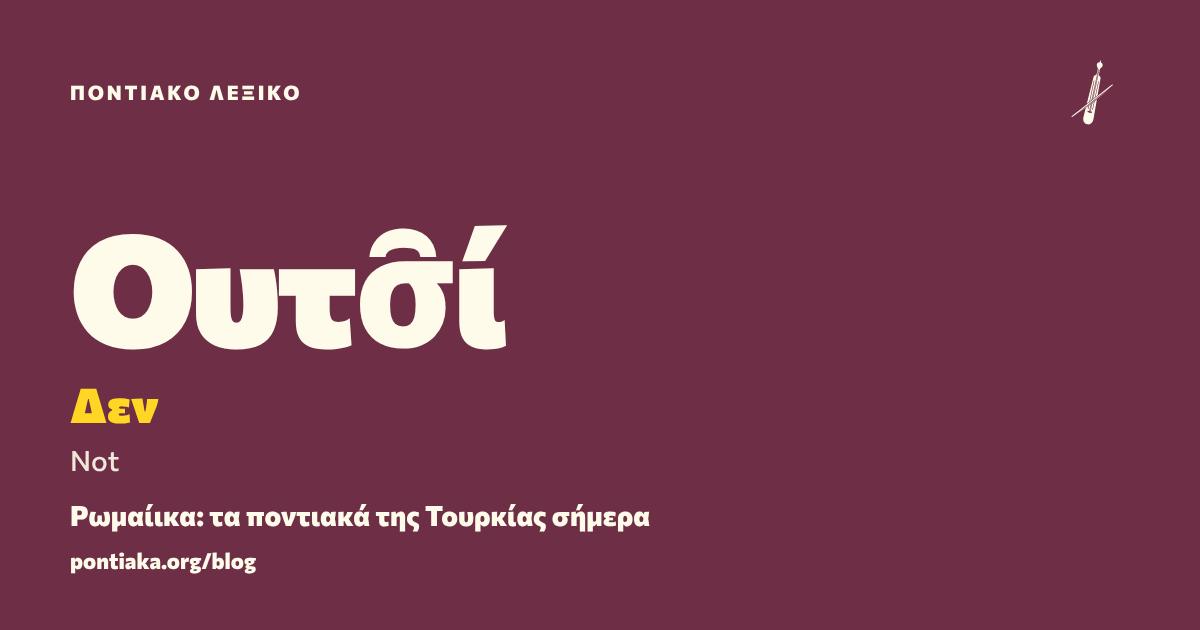
Η άρνηση δείχνει καθαρά τη διαφορά. Στα ποντιακά γενικά λέμε κι, όπως στο κι θέλω σε. Στον Όφη η άρνηση είναι Ου / Ουτσ̑ί (νεοελληνικά: Δεν, αγγλικά: Not, Of form), όπως στο ουτσ̑' ακούω, «δεν ακούω». Το λεξικό μας συνδέει τη μορφή του Όφη με το ελληνικό οὐ, οὐκί, και οι ερευνητές τη γράφουν utš. Πρόκειται για διαφορά ποικιλίας, όχι για δύο λέξεις που λειτουργούν ίδια σε κάθε πρόταση.
Αλλάζει και ο ήχος. Σύμφωνα με την Ακαδημία Επιστημών της Αυστρίας, στον Όφη ορισμένα ουρανικά σύμφωνα γίνονται προστριβόμενα: το καιρός ακούγεται [ʧerós]. Είναι τοπική καινοτομία, όχι απόδειξη ότι ο Όφης κράτησε κάτι ανέγγιχτο.
Λέξεις από την Τσαΐκαρα
Οι Neocleous και Σιταρίδου (2025) δημοσίευσαν ανάλυση της σειράς των λέξεων στα Romeyka, με υλικό από χωριά της Τσαΐκαρας που καταγράφηκε το 2015. Στη μεταγραφή τους βρίσκουμε το utš («δεν»), το opsé («χθες»), το dohtóris («γιατρός»), το éfaen («έφαγε») και το χavíts («πουτίγκα»). Το εύρημά τους: τα Romeyka έχουν μία θέση για την εστίαση και μία για το θέμα της πρότασης, κάτι που θυμίζει τα τουρκικά και διαφέρει από τα ποντιακά της Ελλάδας.
Τα στρώματα φαίνονται και στο λεξικό μας. Η λέξη γιαραλμασί (νεοελληνικά: πατάτα, αγγλικά: potato) έρχεται, κατά τον Mackridge, από το τουρκικό yerelması. Το ίρο (νεοελληνικά: ουράνιο τόξο, αγγλικά: rainbow) το λεξικό το συνδέει με το αρχαίο ἶρις. Και το γαρδέλι, «μικρό παιδί» στον Όφη και τη Σούρμενα, έρχεται κατά τον Mackridge από το λατινικό carduelis, με αλλαγή σημασίας από την καρδερίνα στο παιδί.
Πόσοι το μιλούν
Αριθμό δεν δίνουμε. Οι εκτιμήσεις που κυκλοφορούν διαφέρουν, προέρχονται από διαφορετικές χρονιές και διαφορετικές μεθόδους, και δεν μετρούν όλες το ίδιο πράγμα. Η μείωση από γενιά σε γενιά είναι σοβαρή ανησυχία. Σε συζήτηση στο UCL, η Σιταρίδου αποδίδει την υποχώρηση στο στίγμα, στην επαφή με τα τουρκικά, στη μετακίνηση προς τις πόλεις και στην έλλειψη στήριξης για τη μετάδοση.
Η γλώσσα περνά κυρίως προφορικά και δεν έχει ευρέως αποδεκτή τυποποιημένη γραπτή νόρμα. Γράφεται όμως: οι γλωσσολόγοι τη μεταγράφουν και υπάρχουν κοινοτικά προγράμματα τεκμηρίωσης. Το Romeyka Project του Κέιμπριτζ, με επικεφαλής τη Σιταρίδου από το 2008, άνοιξε τον Απρίλιο του 2024 την τρίγλωσση πλατφόρμα Crowdsourcing Romeyka.
Βρες κι άλλες λέξεις στο pontiaka.org και πες μας στα σχόλια της σελίδας μας πώς τα λέτε στο δικό σας χωριό.
Πηγές
WP: Wikipedia, Pontic Greek
OE: Kahl, Pascaru and Rousiakis, Austrian Academy of Sciences, Pontic Greek
MK: Mackridge (2023), unpublished vocabulary from Sarachos, Lexikographikon Deltion
MT: Mackridge, preface to Tursun's Romeika Turkish dictionary
DW: Dawkins (1937), The Pontic Dialect of Modern Greek in Asia Minor and Russia
Sitaridou, I. (2014). The Romeyka Infinitive: Continuity, Contact and Change in the Hellenic Varieties of Pontus. Diachronica 31(1).
Neocleous, N. and Sitaridou, I. (2025). Word Order and Information Structure in Romeyka. Frontiers in Psychology 16.
Sitaridou, I. Imagining Turkey through Romeyka, conversation transcript, UCL Bartlett.
University of Cambridge (2024). Public release on Romeyka research, as reported by ScienceDaily.
Romeyka Project, Cambridge Centre for Greek Studies.
Convention concerning the Exchange of Greek and Turkish Populations, Lausanne (1923).
In the mountains of the Trabzon region there are still people who speak a Greek variety of Pontus without ever having left. They are Muslim communities, descendants of Greek speakers, and researchers call their language Romeyka. This week we look at the language as it lives in Turkey today: what we know, who says so, and what we still do not know.
One name, several uses
As we saw in the post on where Pontic comes from, speakers historically called their language Ρωμαίικα, a name our dictionary links to Byzantine Ῥωμαϊκή, while in Greece the name Ποντιακά took hold. In Sarachos, today's Uzungöl, Peter Mackridge recorded the form Ρουμάικα for the local language of Of, along with τα ρούμτζ̑α and η ρούμτζ̑ικα. In Turkish the language is called Rumca / Urumce / Rumcika (Greek Ρωμαίικα, "Turkish and Turkish Pontic names for the language"), from the Turkish Rum.
One caution: the same name does not always mean the same language. The Romeyka of Of and Çaykara is not the same variety as the Rumeika of Mariupol, even though both can be written Romeika in English.
Where it is spoken and why it stayed
Research documents Greek speaking Muslim communities mainly in Of and Çaykara, with related communities in the Trabzon region. Some sources also name Sürmene and Tonya. These are not three uniform language blocks: a 2024 report on research from the University of Cambridge said syntax and negation differ from valley to valley, for example between Tonya and Çaykara.
Religion helped determine who was included in the compulsory exchange of 1923. But the history does not fit the sentence "the Muslims stayed and the Christians left": language, place of residence, citizenship, legal exceptions and migration all count too. The date of Islamisation is also open. Ioanna Sitaridou places it in the 17th century for Of and Tonya, while other sources give wider ranges.
The infinitive that stayed
Linguists pay attention to Romeyka mainly for the infinitive. Sitaridou, in Diachronica (2014), documents the infinitive in particular syntactic settings: in clauses with prin, "before", and after negated verbs of ability in the past tense. Her example is utš eporesa evrin=ä, which she renders in Standard Greek as «δεν μπόρεσα να τα βρω», "I couldn't find them". Our dictionary has a similar phrase from Mackridge's preface to Tursun's dictionary: ουτς επόρεσα σταθήναι, "I could not stay".
This is not the ancient infinitive as we learnt it at school. Its use has narrowed and shifted, and Sitaridou argues it has been reanalysed as an element tied to negative settings. She has also said Romeyka is "a sister, rather than a daughter, of Modern Greek". That is her position, not a consensus among specialists. Romeyka is a related Pontic variety with its own history of contact, not a frozen or "pure" form of ancient Greek.
Ουτσ̑ instead of κι
Negation shows the difference clearly. In Pontic generally we say κι, as in κι θέλω σε. In Of the negative is Ου / Ουτσ̑ί (Greek Δεν, "Not, Of form"), as in ουτσ̑' ακούω, "I do not hear". Our dictionary links the Of form to Greek οὐ, οὐκί, and researchers write it utš. This is a difference between varieties, not two words that work identically in every sentence.
The sound changes too. According to the Austrian Academy of Sciences, in Of certain palatal consonants become affricates: καιρός, "weather", is heard as [ʧerós]. It is a local innovation, not proof that Of kept something untouched.
Words from Çaykara
Neocleous and Sitaridou (2025) published an analysis of word order in Romeyka, using material recorded in Çaykara villages in 2015. In their transcription we find utš ("not"), opsé ("yesterday"), dohtóris ("doctor"), éfaen ("ate") and χavíts ("pudding"). Their finding: Romeyka has one position for focus and one for the topic of a sentence, which resembles Turkish and differs from Pontic as spoken in Greece.
The layers show up in our dictionary too. γιαραλμασί (Greek πατάτα, "potato") comes, according to Mackridge, from Turkish yerelması. ίρο (Greek ουράνιο τόξο, "rainbow") is linked in the dictionary to ancient ἶρις. And γαρδέλι, "small child" in Of and Sürmene, comes according to Mackridge from Latin carduelis, with a shift in meaning from the goldfinch to the child.
How many speak it
We are not giving a number. The estimates in circulation vary, come from different years and different methods, and do not all measure the same thing. Decline from one generation to the next is a serious concern. In a conversation at UCL, Sitaridou attributes the retreat to stigma, contact with Turkish, migration to the cities and a lack of support for passing the language on.
The language is passed on mainly by word of mouth and has no widely adopted standard written norm. It can still be written: linguists transcribe it and there are community documentation projects. The Romeyka Project at Cambridge, led by Sitaridou since 2008, launched the trilingual Crowdsourcing Romeyka platform in April 2024.
Find more words at pontiaka.org and tell us in the comments on our page how you say them in your village.
Sources
WP: Wikipedia, Pontic Greek
OE: Kahl, Pascaru and Rousiakis, Austrian Academy of Sciences, Pontic Greek
MK: Mackridge (2023), unpublished vocabulary from Sarachos, Lexikographikon Deltion
MT: Mackridge, preface to Tursun's Romeika Turkish dictionary
DW: Dawkins (1937), The Pontic Dialect of Modern Greek in Asia Minor and Russia
Sitaridou, I. (2014). The Romeyka Infinitive: Continuity, Contact and Change in the Hellenic Varieties of Pontus. Diachronica 31(1).
Neocleous, N. and Sitaridou, I. (2025). Word Order and Information Structure in Romeyka. Frontiers in Psychology 16.
Sitaridou, I. Imagining Turkey through Romeyka, conversation transcript, UCL Bartlett.
University of Cambridge (2024). Public release on Romeyka research, as reported by ScienceDaily.
Romeyka Project, Cambridge Centre for Greek Studies.
Convention concerning the Exchange of Greek and Turkish Populations, Lausanne (1923).
Ακολούθησε το Ποντιακό Λεξικό στο Facebook και στο Instagram για μια ποντιακή λέξη κάθε μέρα.
Facebook@pontiakolexikoInstagram@pontiakolexiko